Redlining & Health Outcomes Research
Literature and evidence review on how historic HOLC redlining patterns relate to present-day chronic health outcomes.
IndependentPublic HealthData AnalysisCausal Inference
PROJECT CASE STUDY
OVERVIEW
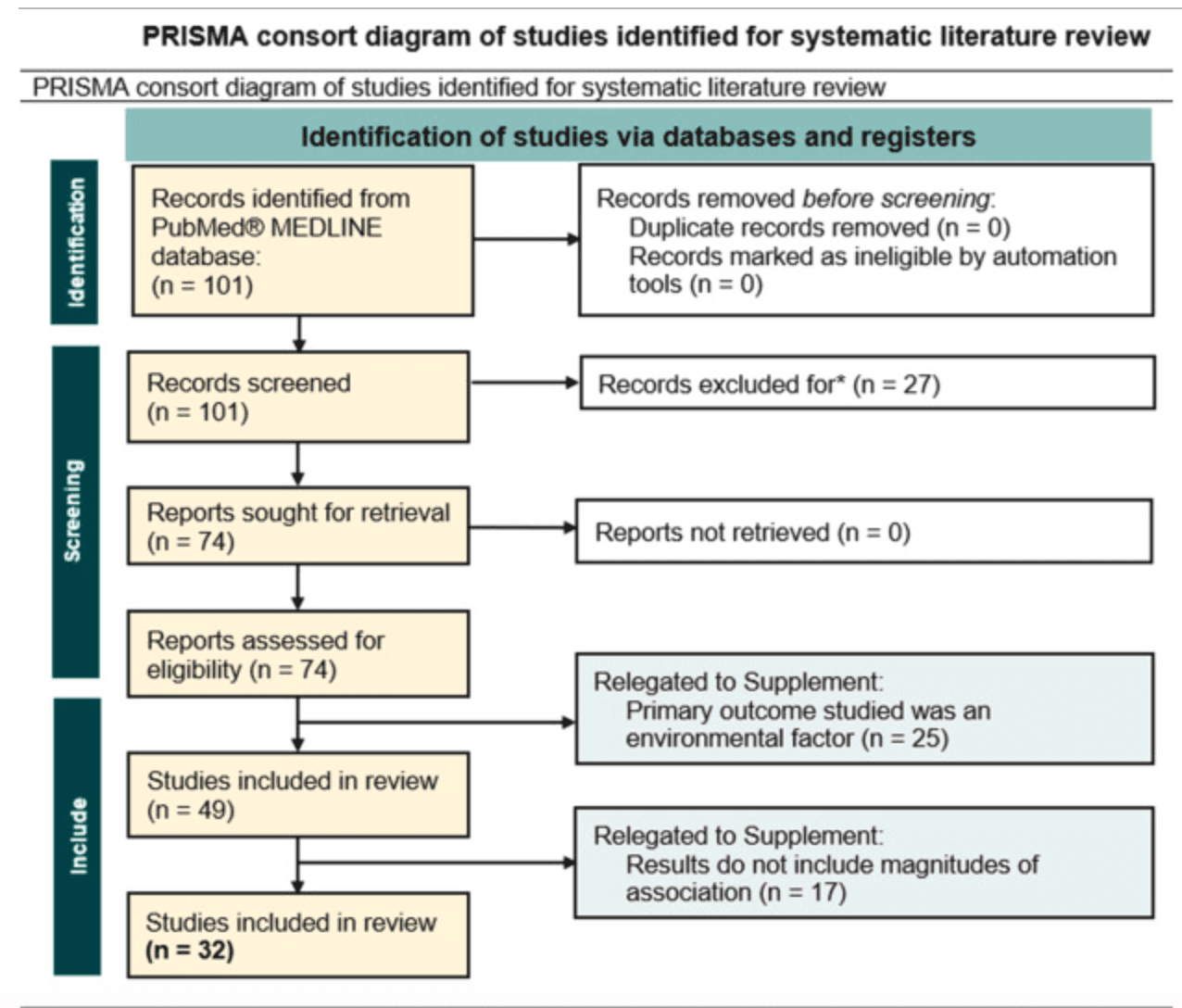
This project asks a direct question: when neighborhoods were graded as higher-risk under historic redlining maps, did that correlate with worse health outcomes decades later? I focused on tracing evidence quality across studies, separating descriptive correlation from causal claims, and identifying where methods were strong versus where confounders were under-controlled.
WHAT I DID
- Reviewed public-health and epidemiology studies linking HOLC grade patterns to chronic disease outcomes.
- Documented dataset scope, modeling choices, and control-variable strategies across papers.
- Compared how different studies handled validation and confounders before drawing conclusions.
- Wrote a synthesis that highlights agreement zones and high-uncertainty claims.
RESULTS / IMPACT
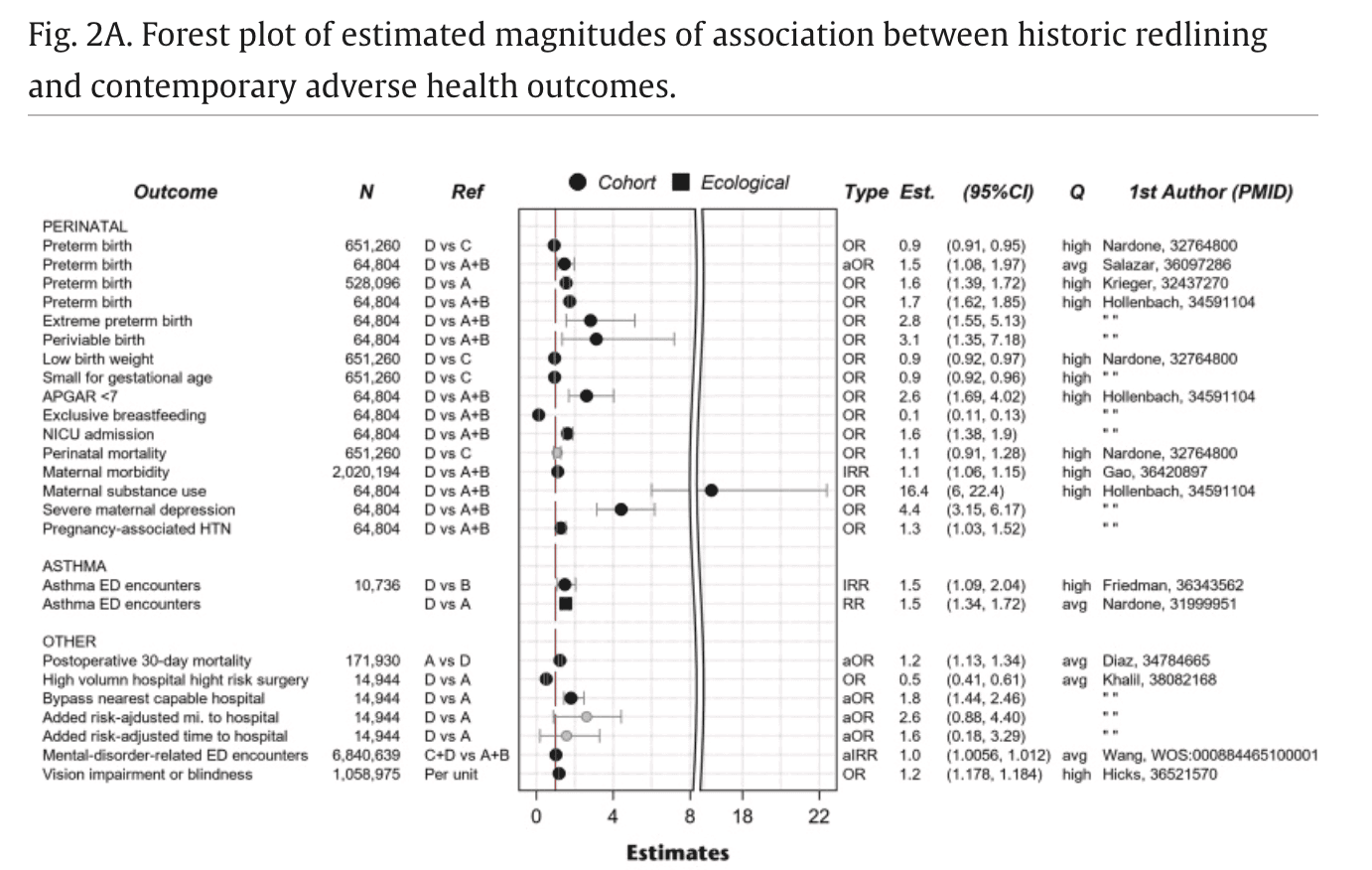
- Most reviewed studies show directionally worse health outcomes in historically redlined areas.
- The strongest claims came from papers that explicitly modeled socioeconomic confounders.
- Result quality depends heavily on study design; not every observed disparity supports a causal statement.
- TODO: add paper-specific effect sizes where available from the final write-up.
LESSONS + NEXT STEPS
- Inference discipline matters: policy-relevant writing should distinguish correlation from causation line-by-line.
- Next step is a tighter evidence table with methods, controls, and effect-size comparability across studies.
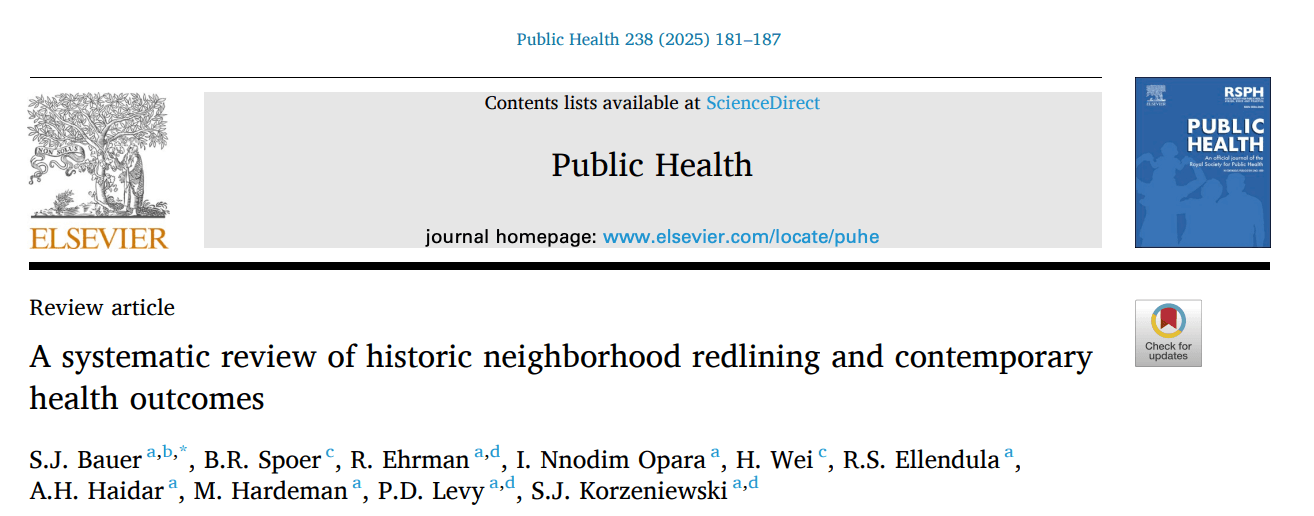
RESEARCH PAPER
Scroll through the full paper directly below.
If the preview doesn't load, open the PDF .
GALLERY